
17 August 2026 · 3 min read
When people plan a new driveway, they often focus on the material first and the finish second. In practice, the pattern and colour of your block paving do just as much work as the blocks themselves. Get them right and the driveway sits comfortably with the house and the street. Get them wrong and even good workmanship can look out of place. At CLM Projects we lay block paving across Leeds and the wider West Yorkshire area, and the questions we get most often are about how to choose a look that lasts.
Two-tone laying: why it works
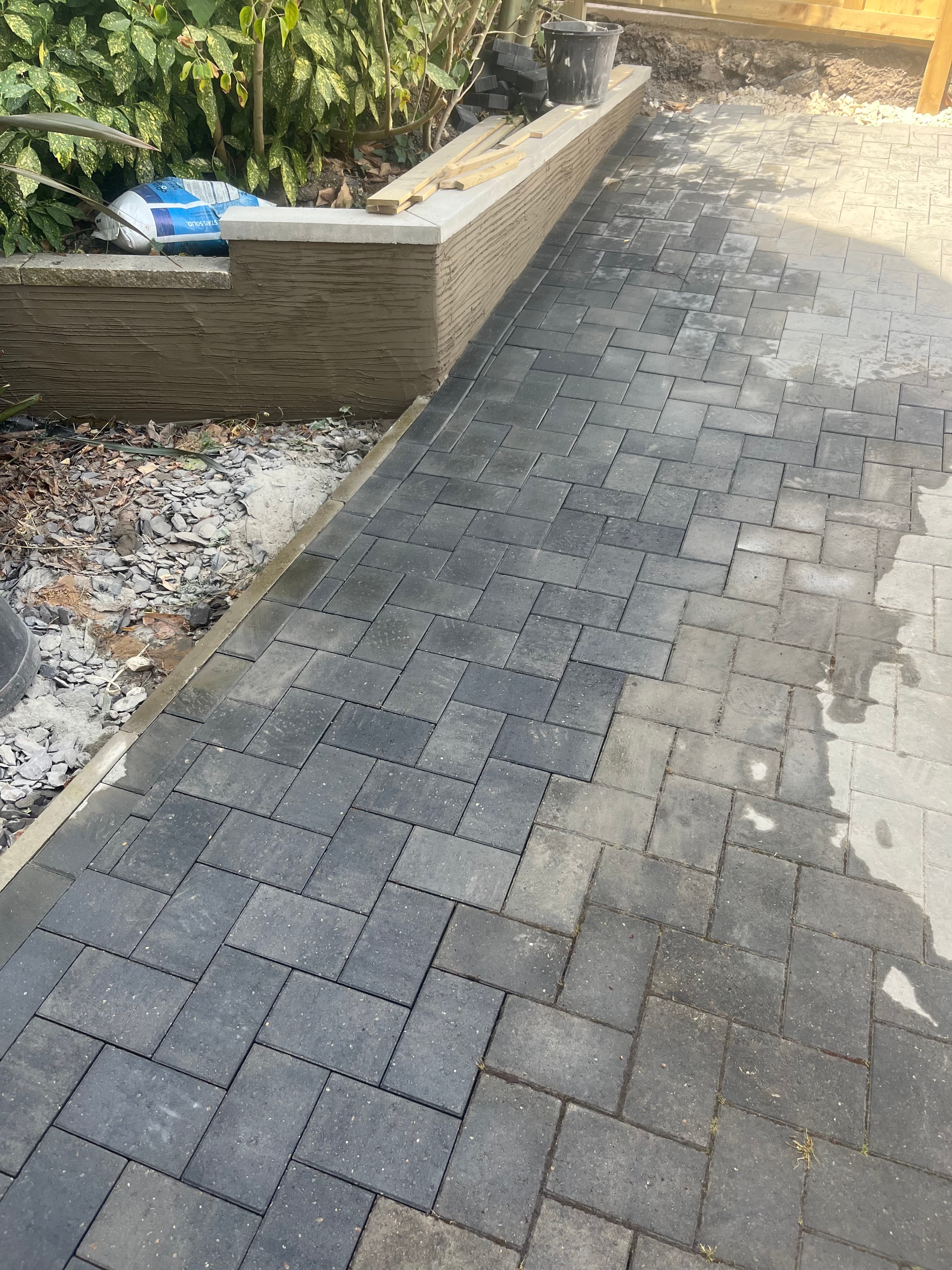
A recent driveway we finished in LS17 used a two-tone grey and charcoal block. The lighter grey covers the main body of the drive, with the charcoal picking out a border and a run through the middle. This is one of the most reliable choices for a Leeds home because it flatters both modern render and older brick. The darker edge frames the space, hides tyre marks better than a pale single colour, and gives a clean line where the driveway meets a lawn, path or fence.
If you prefer something quieter, a single mid-grey with a soft charcoal border still reads as tidy without drawing too much attention. The mistake we see is picking a very pale block across the whole area. It looks bright on the day it is laid, but staining from oil, leaves and general use shows quickly.
Laying patterns and what they suit
Herringbone is the standard for driveways for a good reason. The interlocking angle spreads the weight of a car and resists the blocks creeping over time, which matters on the sloped and shared drives common around Roundhay, Alwoodley and Chapel Allerton. Stretcher bond, laid like brickwork, suits paths and lower-traffic areas but is less forgiving under vehicles. For patios and garden entrances, a stack or basketweave can look smart, though it needs a firm base to stay square.
The base is what you are really paying for
Colour and pattern are the part you see, but the base is what decides whether the driveway still looks good in ten years. On the LS17 extension we recently completed, we removed an old wall, extended the boundary, built and scratch-coated a new retaining wall, and set timber shuttering for a proper concrete base before any blocks went down. That preparation is not glamorous, but it stops the sinking, pooling and lifting that ruin cheaper jobs.
Edge restraints are just as important. Without a solid haunched edge, blocks work loose from the outside in, and the pattern you chose starts to spread and gap.
Matching the driveway to the whole frontage
A driveway rarely sits on its own. It usually meets fencing, gates and often a dropped kerb. We tend to plan these together so the finish feels considered. On the same job we installed a sliding gate and timber fence panels alongside the paving, so the colours and lines carried through rather than clashing. If you are having a dropped kerb done, it is worth coordinating the timing so the paving finishes cleanly at the road.
A few honest pointers
Order a little more block than the plan suggests, so repairs years later still match. Ask to see the same block laid elsewhere before you commit, because samples look different in bulk. And think about drainage early, since the fall of the paving decides where water goes.
If you are planning a new driveway or extending an existing one anywhere around Leeds, we are happy to talk through patterns, colours and the groundwork involved. Get in touch with CLM Projects for a quote.