
16 July 2026 · 5 min read
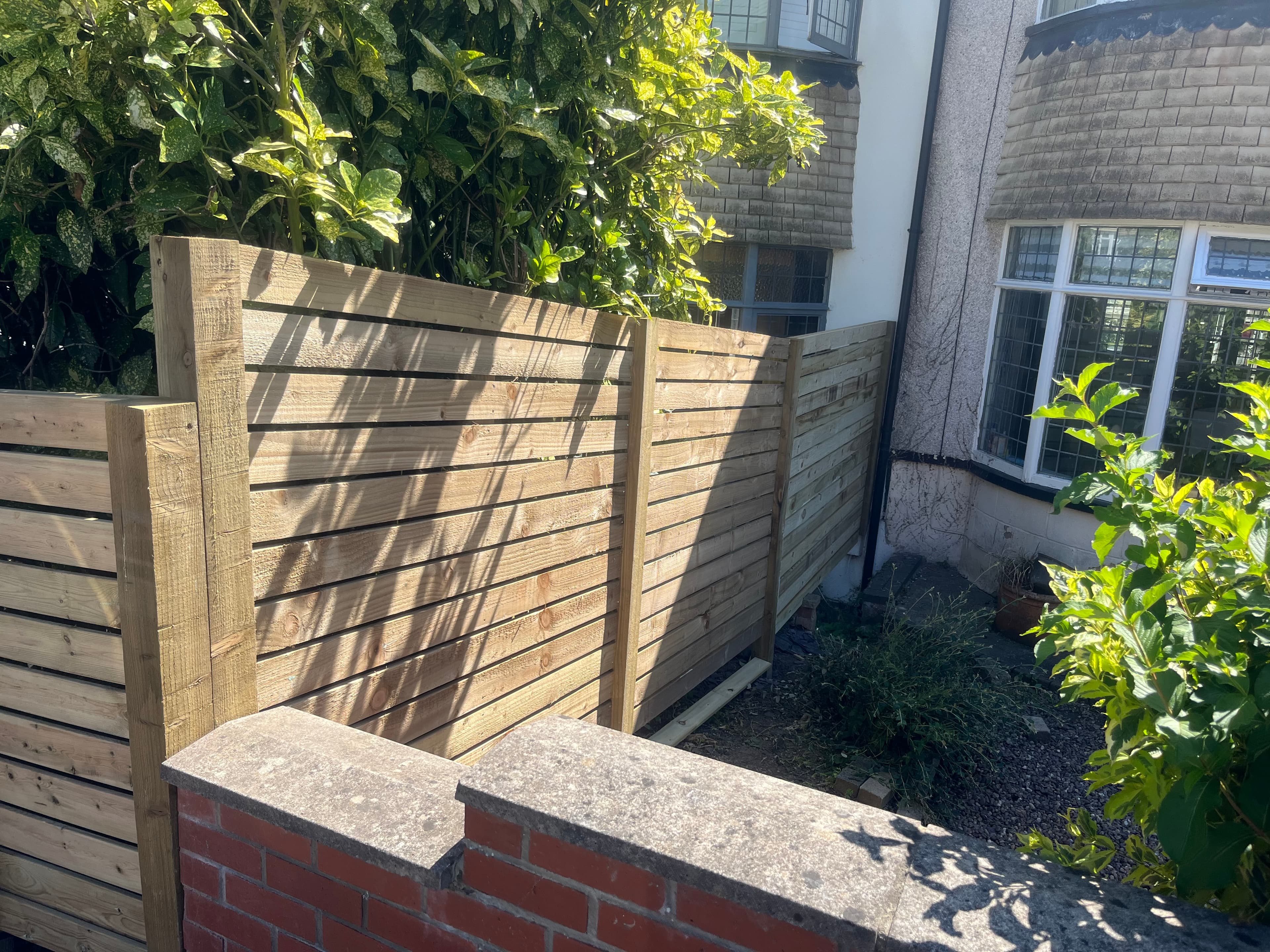
Garden Fencing in Leeds: An Honest Guide
A new fence is one of those jobs that looks simple until you start pricing it up. Quotes vary a lot across Leeds, and it is rarely obvious why two prices for what sounds like the same fence come out so far apart. Usually it is nothing to do with the panels. It is the posts, the ground they are going into, and what has to come out before anything goes in.
This guide explains the different fence types we fit, what really drives the cost, and how long you should expect a good fence to last. It's written from years of putting fences up across Leeds gardens, not copied from a merchant's catalogue.
The Main Fence Types
Panel fencing is the most common choice. Pre-made panels (usually 6ft wide) drop between posts, so it goes up quickly and keeps costs down. Standard waney-edge or overlap panels are the cheapest option, but they're also the first to sag or blow out in a Yorkshire gale. Better-quality framed panels last considerably longer.
Closeboard fencing is built board by board on site. It's stronger, heavier and far more durable than panels, the vertical boards overlap onto horizontal rails fixed to sturdy posts. It costs more because it takes longer to build, but for a permanent boundary it's worth it.
Feather edge fencing is really a form of closeboard. Tapered boards are overlapped and nailed to give a solid, gap-free finish. It suits sloping gardens well because it can follow the ground rather than stepping in fixed panel widths. This is our usual recommendation for exposed or long boundaries.
What Actually Determines the Price
Here's where the honesty matters. The visible timber is only part of the story.
Post depth and concrete. A fence lives or dies at ground level. Posts should go roughly 600mm into the ground (deeper for taller fences) and be set in postmix or concrete. Cheap quotes often cut corners here, shallow posts or no concrete, and the fence leans within a couple of winters. Proper post-setting is labour and materials you can't see, but it's the single biggest factor in how long the fence lasts.
Timber quality. Pressure-treated softwood is standard, but treatment grades vary. Posts in particular should be well treated, as they're the part that rots first. Concrete posts cost more upfront but outlast timber and don't rot at all, often the sensible choice for a long run.
Height. A 6ft fence uses more material and needs deeper, stronger posts than a 4ft one. Anything over 2m usually needs planning permission, so most garden boundaries stay at 1.8m.
Boundary length. Longer runs need more posts, more panels and more digging. Ground conditions matter too, clay, tree roots and old concrete footings all slow the job down and add cost.
Access and disposal. Removing an old fence and getting rid of the waste takes time. Awkward rear access, where everything is carried through the house, adds labour as well.
Rough Costs in Leeds
Prices change with timber costs, but as a realistic guide:
- The posts. Timber posts are cheaper on the day and are the part that rots first. Concrete posts cost more up front and are the reason a fence is still standing straight in fifteen years. It is the single biggest difference between two prices for the same-looking fence.
- The ground, and what is already in it. Post holes in soft soil are quick. Holes through old concrete, buried rubble or tree roots are not, and that time is real. Taking an old fence out — and whatever the last one was concreted into — is often a bigger job than putting the new one up.
- The run itself. Slopes, steps, corners and gates all cost more per metre than a straight flat run, because each one has to be set out on its own. A made-to-measure gate is its own job and can be a meaningful part of the total.
We do not publish a per-metre rate. The honest version depends on all of the above, and quoting a figure before seeing your run would be a guess dressed up as a price. Tell us roughly how long the run is and we will come and look.
These include posts, concrete, fixings and labour. Beware of quotes far below these figures, the saving usually comes out of post depth or timber grade, and you'll be paying again in a few years.
How Long Should a Fence Last?
A cheap overlap panel fence with shallow posts might give you five to seven years before it starts leaning or the panels break up. A properly built feather edge or closeboard fence on well-set concrete or treated timber posts should comfortably last 15 to 20 years, often more with occasional maintenance.
The boards will weather and may need re-treating, but the structure stays sound. That's the difference proper installation makes.
Getting It Right First Time
Before any work, it's worth agreeing the boundary line with your neighbour and being clear about which side the posts and rails face. Small details, but they save disputes later.
If you're planning new garden fencing in Leeds and want a straight answer on costs and the best option for your garden, get in touch with CLM Projects. We'll come out, measure up and give you an honest quote based on what will actually last.